Friday, May 18, 2018

Field Trip to Roboré

When it comes to destinations in eastern Bolivia, the little town of Roboré comes up as a top spot -- spectacular scenery, great hot springs, flora, fauna, and lots of history.  At only 5-6 hours' drive from Santa Cruz, it's a perfect place to go spend a relaxing weekend.  However, relaxing weekends aren't really part of our lifestyle, so we've never been.

Panorama taken from the base of Chochis tower
That changed because of a project Kaylee is doing with the girls in homeschool; later this year, they will be studying Bolivian history.  To make their study more enjoyable and relatable, they will be interviewing a variety of people they know here in order to learn from their personal stories.  Their first interviewee was our friend Judy, who grew up in Roboré as a missionary kid and came back to serve in Bolivia as an adult with her husband. She loves to show people around her hometown and suggested that her story would have even more impact if we went and saw it for ourselves. So we did!

(As usual, more photos here: Field Trip to Roboré - Google Photos)

The girls were excited to camp, but we had outgrown our well-worn, second-hand tents, so I took them tent shopping a few days before.  On Saturday morning, we packed up and hit the road, planning to come back on Monday.

Our first stop, other than the standard toll booths and police checkpoints, was the little town of San José de Chiquitos.  The church there is one of six that make up the UNESCO World Heritage Site known as the Jesuit Missions of Chiquitos. Although we don't agree with their doctrine, we love the architecture! ;) Traveling to visit all six is a very popular tour option for visitors.  We would have liked to investigate the compound, but it was noon and all closed up, so we settled for lunch and went on our way.


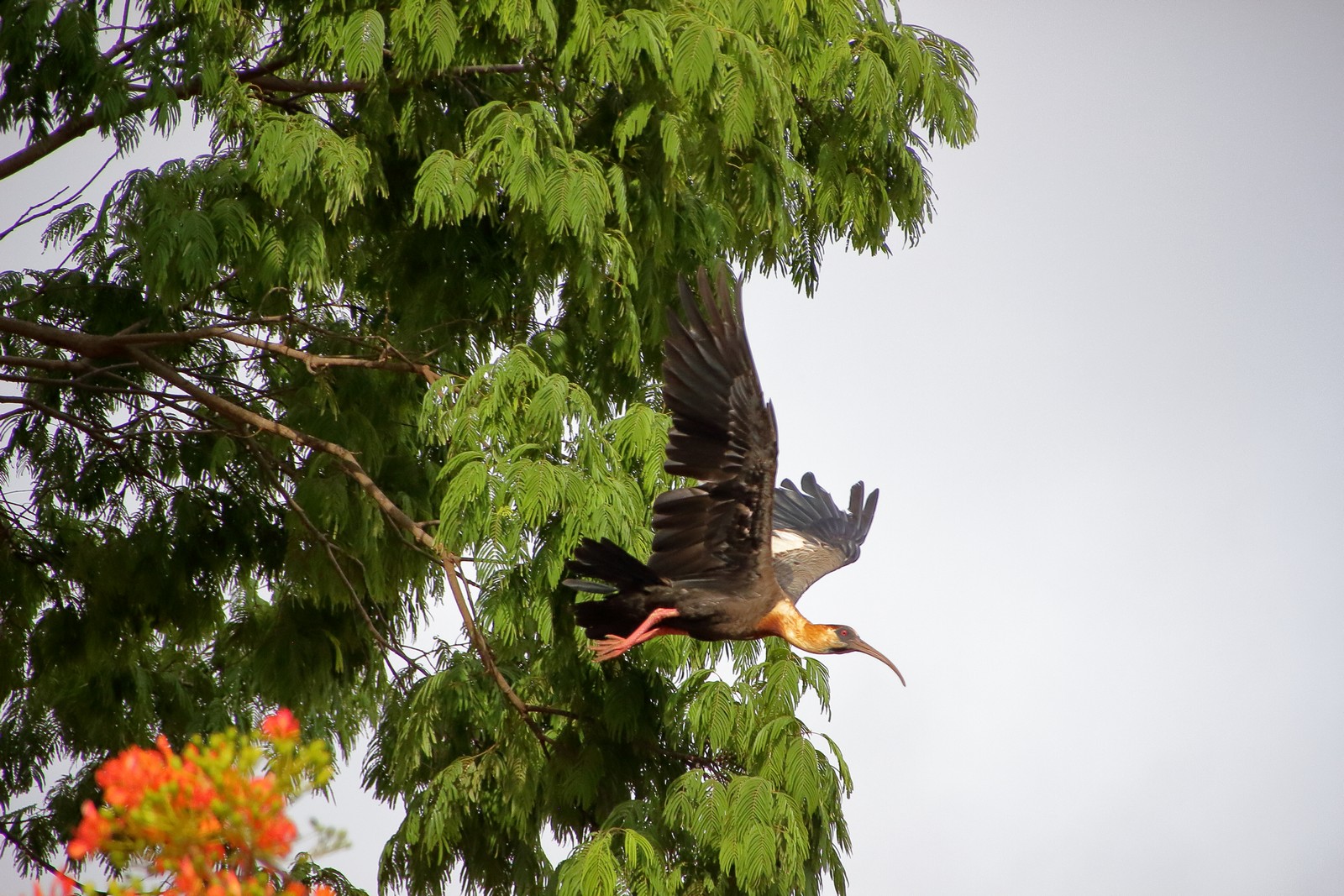
Along the way, Kaylee and the girls had gotten their first glimpse of wild toucans and there were several in the plaza of San José.

I was excited to get a photo of one of the goofy critters in flight! ;)

As we left San José, the scenery began a dramatic shift from the yawn-inducing flatness of Santa Cruz to the broken hills and valleys that characterize Roboré.  Unfortunately, the weather closed in on us as well and although it didn't rain until much later, we passed the rest of the day under a heavily overcast sky.  It affected the photos, but it didn't dampen our enjoyment of the sights.
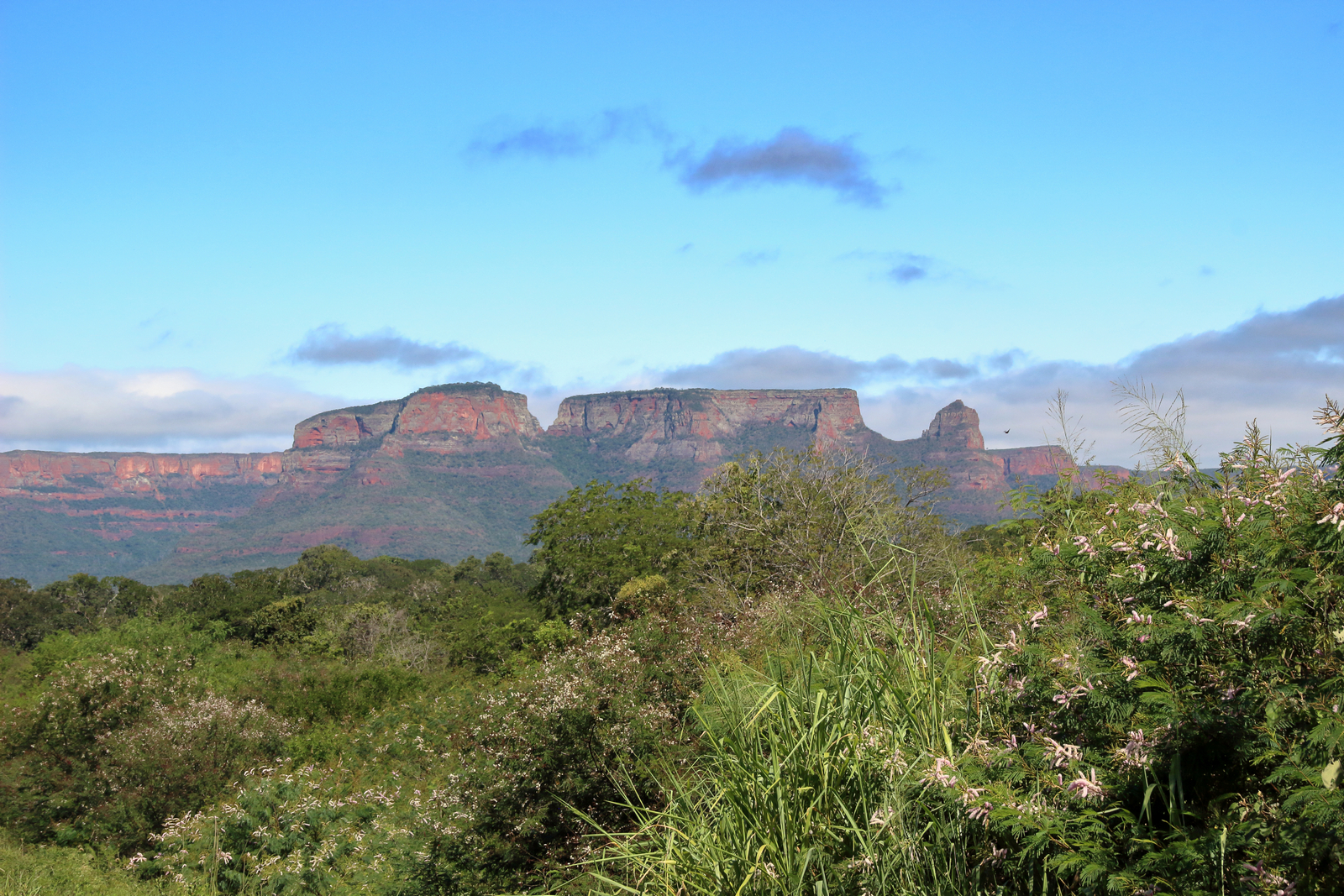

Our next stop was at Chochis, a rock formation that outsiders have nicknamed Muela del Diablo, or devil's tooth, although there are at least two other locations in Bolivia that also claim that name.  Officially, it is called the Tower of David, but most just refer to it as the tower or hill.

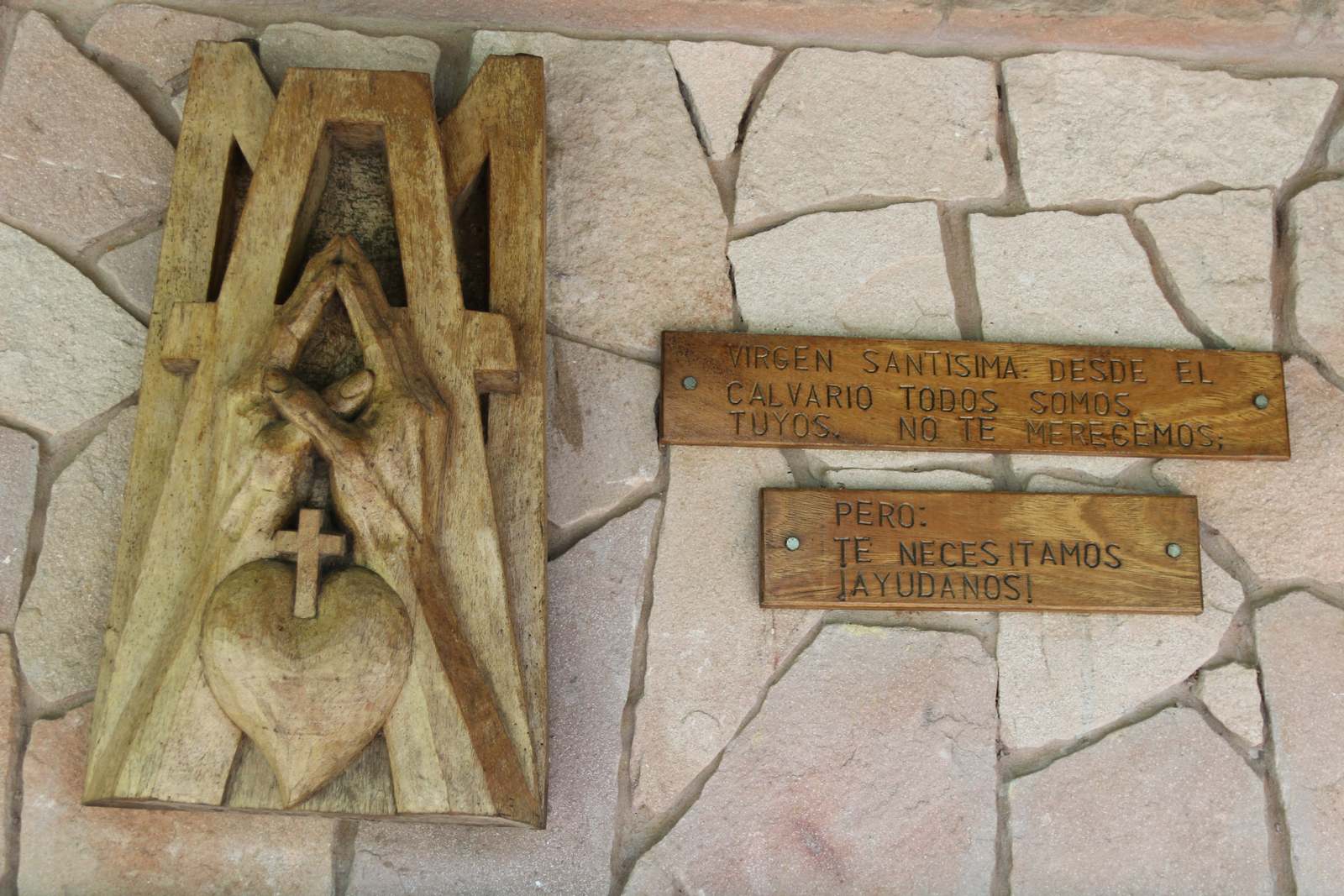
There is a "sanctuary to Mary" at the base of it with intricately carved doors and pillars, woodwork typical of the Chiquitanía region. It was built in commemoration of a nasty flood that did a lot of damage and killed a lot of people in 1979.  While the wood carving was amazing, we found the overwhelming worship of Mary disturbing (but not surprising).

The side of the sanctuary had a massive door in door in that swiveled on a pivot.  It featured Eve as the central figure of the Fall on one side and Mary as the central figure in Redemption on the other.  It would have done the sculptor well to study Romans 5 on both counts.

Eve as the central figure in Eden

Mary as the central figure at Calvary
"Most Holy Virgin, from Calvary we are all yours.  We do not deserve you, but we need you.  Help us!"
As sobering as it was, we enjoyed the art and of course posed for another family photo or two.

Upon leaving Chochis, we were only a few miles away from Roboré.  We wandered around town a bit, but as it was getting late and we still needed to set up camp, we really only took time to stop by Judy's childhood home and get a picture of her and the girls in front of it.

What we didn't know at that point is that we weren't actually spending the night in Roboré.  We actually went a few miles farther to a place called Aguas Calientes (hot waters), where there is a campground alongside a hot spring.  Now, I mentioned above that we were planning on camping and that the girls were very excited about it.  To be honest, the only camping they have done here is in the "backyard" at Etnos and they were looking forward to being out in the country and doing some real camping.  Unfortunately, that was not to be.

When we rolled up to the campground, it was immediately apparent that it did not line up with our expectations.  It consisted of maybe 50 pahuichis or grass-roofed shelters and it was LOADED with people hustling and bustling.  It was a shocking contrast for the girls, who have only known quiet Forest Service campgrounds like the one on Battle Ridge.  When we found an available spot and started unpacking next to a group of youths who were listening to their reggaeton with the typical latino love of volume, the two younger ones broke into tears.  Thankfully it was short lived; some time in the hot spring helped a lot!

After getting a reasonably good night's sleep in their new tent, they were much happier in the morning
Thankfully, the youths turned their music off somewhere around 11:00pm and the weather deteriorated no more than a steady drizzle overnight.

In the morning we got to enjoy the hot springs and more birds!

Bare-faced ibis

Snowy egret

The hot spring formed a huge, shallow lagoon that was a perfect temperature for a misty morning!
After soaking for a couple hours, we packed up our gear and headed out for some more sights.  Unfortunately, the weather closed in even farther rather than lifting, which changed our plans slightly, but we still enjoyed ourselves.

We visited Santiago de Chiquitos, near where the first five missionaries from New Tribes Mission (now known as Ethnos360) were killed while trying to make peaceful contact with the Ayoré people in 1943.  It's an incredible story of how God worked through the tragedy, especially considering that we have Ayoré friends who are our brothers and sisters in Christ!
At the plaque commemorating the deaths of Cecil Dye, Bob Dye, Dave Bacon, Eldon Hunter, and George Hosbach
The memorial plaque is at the trailhead for a series of lookouts called "The Antechamber of Heaven," which apparently have amazing views, but as you can see from this next photo, it wasn't worth our time to hike to them!

Catholic church in the plaza of Santiago de Chiquitos
Our last big stop of the day was a fun drive and a short hike into an amazing waterfall north of Roboré, called Chorro San Luis. 

Kaylee and the girls behind the falls, for perspective!
That night, instead of camping again (it was supposed to rain more), we decided to stay in a hotel owned by people Judy knows, next to the church her father pastored in Roboré.  We spent an uneventful night, had a nice complementary breakfast, and busted back home to Santa Cruz.  All in all, it was an enjoyable weekend and I think we all agree that we should go back sooner than later!

Tuesday, March 6, 2018

Wedding in La Paz!

Back in August, one of our coworkers (a former student) asked us to participate in her wedding:  our daughters as flower girls and I (Nathan) as photographer.  Naturally, we were all very excited to accept, not least because of an excuse to go see La Paz!  Although we have traveled through the capital city, we have never had a chance to get out and see it.  Because the wedding was planned for the end of January, during our long break (in the training program), we made a week of it.

(I am including a few photos here.  Many more can be found in our Google Album. As usual, you can click on these to see them in a larger size.)

There were several things that made the whole week uncertain.  We had hoped to drive up, a two day trip, but due to political unrest at the time, we were forced to make the decision to fly.  The wedding was going to be outdoors at a botanical garden, but the weather was forecasted to be pretty miserable.  However, God timed everything so that both unrest and rain happened in ways which did not impede any of our activities!

La Paz was founded by Spanish conquistadors in 1548 on the site of an Inca settlement -- in a deep valley on the edge of the Altiplano at 12,000 feet above sea level.  The downtown area retains much of the colonial architecture that was built in the succeeding years, now combined with more modern high rises, while the outlying areas are built up in a more local style.  Naturally, I was ecstatic to have something to photograph besides the flatland of Santa Cruz. ;)
The main road into town, with the Basilica of Saint Francis, at dusk
We only had one day free to explore, but we made the most of it! In spite of a transportation strike/protest, we managed to get to the central plaza and several museums.  We started our day with the Museo Nacional de Etnografía y Folklore (National Museum of Ethnography and Folklore) which turned out to be the best museum we have ever visited here.  We were impressed not only by the extensiveness of the exhibits, but the presentation and information provided as well.  Kaylee was in love as soon as we walked into the first exhibit and found alpaca yarn with traditional tools and dyes!

Beyond the yarn we found textiles, pottery, ceremonial masks, metalwork, woodwork, farm implements, and other important aspects of Bolivian life.  One thing we appreciated about the exhibits is the cross-section of various strong cultures in Bolivia.  Although the highland cultures (Quechua and Aymara) tend to overwhelm the others based on sheer numbers as well as technological advances,  there was a good representation of the different cultures of Bolivia.  Most of the featured items are historically important, with an emphasis on what life was like before the Spanish invasion.
Aguayos and ponchos from the Quechua and Aymara cultures
Pottery and Ceramics.  There's a closeup of that jaguar bowl in the photo album.
Lydia and Addi checking out some of the headdresses 
We are amazed at the delicate work they do in silver here!
We wanted very much to get up to Lake Titicaca, only a short drive from the city, but without a vehicle and with very limited time, it just didn't work out.  Maybe next time.  Until then, this will have to do:
My girls at the Titicaca exhibit
We also had fun at the plaza, feeding the inevitable pigeons and looking at the government buildings and the cathedral.

In the main plaza
On Friday, we had a completely new cultural experience.  Although we have attended church weddings in Bolivia, we have never been present for a civil ceremony, in which the couple is married legally.  Other than the two witnesses and the notary (who, in the Bolivian legal system, is a lawyer representing the government), we were the only non-family members present.  It was held in the home of the bride's parents.  I expected that it would be a short affair centered around signing documents, but the notary actually preached a very good "sermon" focused on the contractual aspect of marriage.  There was an exchange of vows and a kiss and they were legally married!


Naturally, I was excited to find that the house was up on  a steep hill and I took advantage of the time we had to wait between events to wander a bit and take some photos!
I was visited by a group of stray dogs and this one decided to pose for me!

The urban gondola system has been a feature project by the current government to help with congestion on the crowded, narrow, steep streets.  It's a lot of fun, too!

Someone told me once that La Paz is the only city in the world where the poor live uphill from the wealthy
Finally, on Saturday, it was time for the event which we had been anticipating for several months.  The wedding was held outdoors at the local botanical garden.  It had been raining on and off all week and we had been praying for a dry day and God answered abundantly.  Not only was it dry, but beautiful as well!

I had been very, very nervous about how it was all going to go for me, since I had never before been THE photographer at something so critical as a wedding.  Thanks to help from Kaylee and the preparation I had done ahead of time, it all went fairly smoothly with only a few hiccups.  I obviously have a lot to improve, but I am content for my first time.  I ended up taking 1,500 photos!  Here are a few of my favorites (more in the album):

The girls' first wedding!

My beautiful ladies

Bride's entrance

Newlyweds!


I literally did a happy dance when I saw how this shot turned out :)


After all of the congratulating and photo taking and hugs and cake-cutting, our family escaped with the bride and groom and went to take some more photos.  We first went to a lookout called Killi Killi where there is a fantastic view not only of the city but its biggest, best, most beautiful feature:  Mount Illimani.


Mt. Illimani as seen from Killi Killi

Speaking of Illimani, my one other goal for this trip was to get up to the west side of the La Paz valley and shoot the mountain over the city at sunrise.  Mt Illimani is almost due east, so it naturally lends itself to sunrise/sunset photos.  I put quite a bit of time into figuring out where to take the photos from and when.  The last night of our trip, I set my alarm for 4:30am, but I woke up naturally at 3:00 (I didn't sleep well all week, probably nerves/stress) and found a taxi to El Alto, above 13,400 ft.  With the bad weather, I wasn't sure what I was going to get, but I had to try.

As conditions changed throughout the morning, I made a video of the experience:

Here are a couple of my favorite photos from the morning:


Thursday, November 9, 2017

Nathan's Trip to Brazil

At the end of October, I had the opportunity to travel to Brazil for the first time.  It was the first time I have been in a different country than my wife and kids, and my first time visiting a country where I knew nothing of the language.  There were a few other firsts on this trip, but perhaps the most important is that it was my first opportunity to participate in one of our mission agency's international forums.
Rainy day in São Paulo
Our organization works in about 20 countries around the world.  About half of them have training centers, like Etnos, that exist to prepare local believers to join us in the work of planting churches in unreached people groups.  One of the challenges of managing so many different training programs is keeping everyone on the same page.  Our goal is that the graduates of any one of the centers can seamlessly join a team with graduates of any other center, united by shared theology, values, and ministry strategies.  In order to facilitate this coordination, our mission regularly holds forums so that leaders of the centers can meet and talk about what their programs are doing.  This year, representatives from the five campuses in Latin America met in Brazil for that purpose.


Since June, I have been serving as a member of the leadership team that oversees the Etnos training along with two Bolivian missionaries, David and Mariano.  David and I were both able to attend the forum, and we enjoyed spending nine days with coworkers from all over the world, most of whom we had never met.  Perhaps the most positive aspect of this trip was the ability to get to know other missionaries in similar ministries and chat with them about their experiences.  As it was also David's first time in Brazil and in a mission forum, it was a good shared experience for us as teammates, as well.

David expounded on a theme during the forum
One of the themes that came through very strongly in our conversations was the need for more informal discipleship of our trainees outside of the normal hours and structure of "the program."  Unfortunately, we often fall into the trap of fulfilling our "duty" of classes, counseling, and ministry responsibilities, but do not spend much time with our students outside of that environment.  Although we may be teaching good principles, disciples tend to imitate the manner in which they have been taught just as much as the material they have been taught.  If we want missionaries that take time to do life-based discipleship, that needs to be modeled here, first.

The bulk of our time was spent around this table, sharing ideas
Another strong theme ties into the last one: the need for more practice as part of training.  We already have time set aside for our students to practice the things they are learning in a variety of environments, but these tend to be structured times that are separate from the classroom.  We often teach a concept or task and then ask the students to perform it without having done it together first.  And so we are looking at how we can incorporate more demonstration and practice time into the classroom environment.

One of the challenges of the week was knowing which language to speak!  The majority of the participants work in Spanish-speaking countries (a few of us from English-speaking countries), but our Brazilian hosts speak Portuguese!  It was interesting to see what could be communicated across the language gap and what couldn't.  Generally, the Brazilians spoke Portuguese at us and we spoke Spanish at them and we got along okay, but when critical points came up, we relied on our quadrilingual coworker Barry to make sure we understood the details.
Barry translating for Kleber, the director of the program in Brazil
I didn't have the opportunity to see very much outside of the training center, but with a 20-acre campus on the outskirts of a big town, I had plenty of photographic opportunities that came to me.  My normal 6:30am wakeup was perfect to jump up and get outside just before sunrise and see what the day was going to bring.

(As usual, there are more birds/flowers/scenery photos in our Google photo album!)

David and I initially arrived on campus around midnight after a busy day of flights and airports, so I didn't have a chance to see anything before falling into bed.  Walking out the door that first morning, I was shocked to see about 10 bright red trees, called Flamboyant trees (Delonix regia)!

I was very pleased with the number of flowers and tweety birds I saw:
Great Kiskadee
 

Fork-tailed Flycatcher
One of my favorite moments was watching this ovenbird feeding her kids!

However, the #1 attraction for me were the buff-necked ibis.  We saw or heard them every single day as they came and went between the campus and the surrounding yards.  I got my first chance to photograph one very early in the week, but due to an error on my part (forgot to remove a lens filter), the photos I got weren't very good.
My first attempt at ibis photography ;)
I prayed all that week that I would get another shot.  I know, it's not a very "serious" prayer, but apparently God enjoys giving us the little things, because on Saturday, my last morning on campus, I had the amazing opportunity to follow this pair around for about half an hour, as they hunted for breakfast:


Saturday was a free day because we were finished with the forum but weren't leaving until the wee hours of the next morning.  I spent the day with David and a few others, wandering around the town looking for souvenirs to take back to our families.  
The only photo I actually appear in, other than the planned group photo above!

The train station